
Highlighting a tree
-
in-lite | MINI SCOPE | Outdoor Spotlights
Regular price €102,14Regular price -
in-lite | SCOPE | Outdoor spotlights
Regular price €130,91Regular price -
in-lite | BIG SCOPE | Outdoor spotlights
Regular price €167,60Regular price -
in-lite | BIG SCOPE NARROW | Outdoor spotlights
Regular price €167,60Regular price -
in-lite | SMART SCOPE TONE | Outdoor Spotlights
Regular price €197,35Regular price -
in-lite | NERO | Recessed lights
Regular price €157,68Regular price -
in-lite | BIG NERO | Recessed lights
Regular price €241,98Regular price -
in-lite | BIG NERO NARROW | Recessed lights
Regular price €241,98Regular price

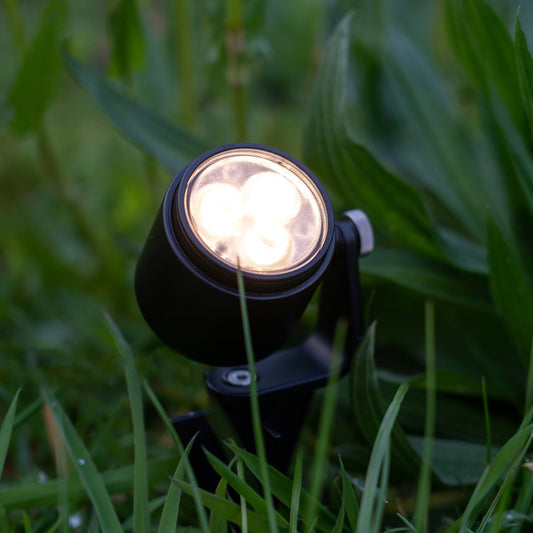

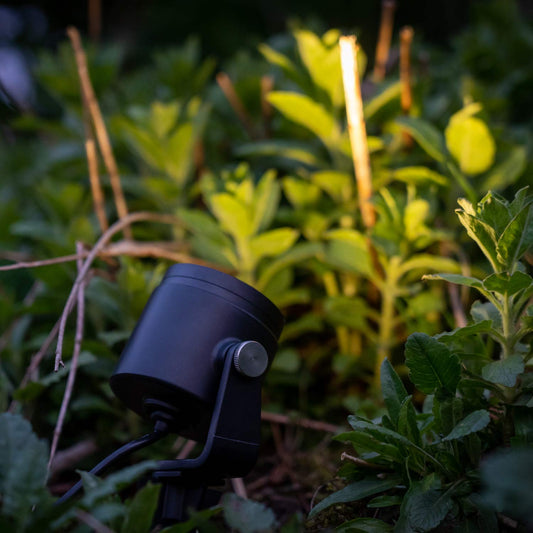






What type of fixture is best for highlighting a tree?
Choose the fixture based on the scale of the tree and the distance the light needs to reach. A compact fixture is often sufficient for smaller trees, while taller specimens and larger crowns benefit from a more powerful in-lite spotlight.
| Tree situation | Lighting approach | Why it works | in-lite examples |
|---|---|---|---|
| Small tree or multi-stem shrub | Compact and directional in-lite spotlight for uplighting | Gives precise control over the trunk, branches, or lower canopy without overpowering a smaller specimen | MINI SCOPE |
| Medium-sized tree | Directional in-lite spotlight for uplighting with greater reach | Provides more reach while remaining adjustable, making it suitable for illuminating both the trunk and a larger part of the canopy | SCOPE |
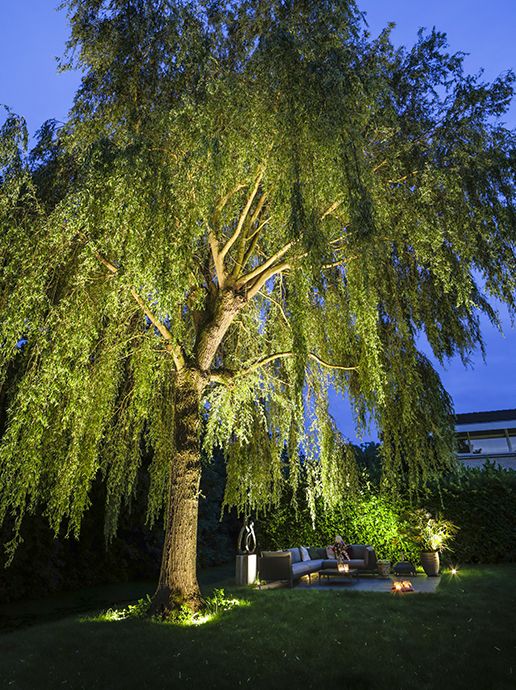
| Large or tall tree | Powerful and adjustable in-lite spotlight for maximum reach | Choose the standard beam to illuminate more of the tree or the NARROW version to concentrate the light higher into the canopy or on a specific feature | BIG SCOPE BIG SCOPE NARROW |
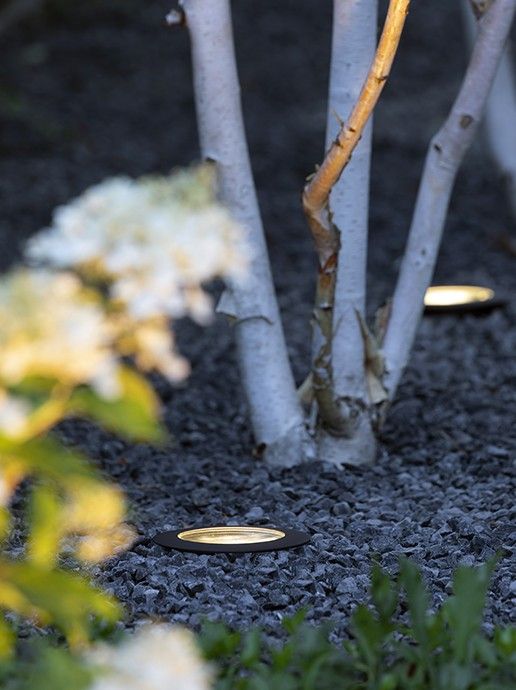
| Large tree with ground-level uplighting | in-lite recessed light with maximum power for close uplighting | Creates strong upward illumination from a recessed position at ground level; choose NARROW when a more concentrated beam is required | NERO BIG NERO BIG NERO NARROW |
Which part of a tree should you illuminate?
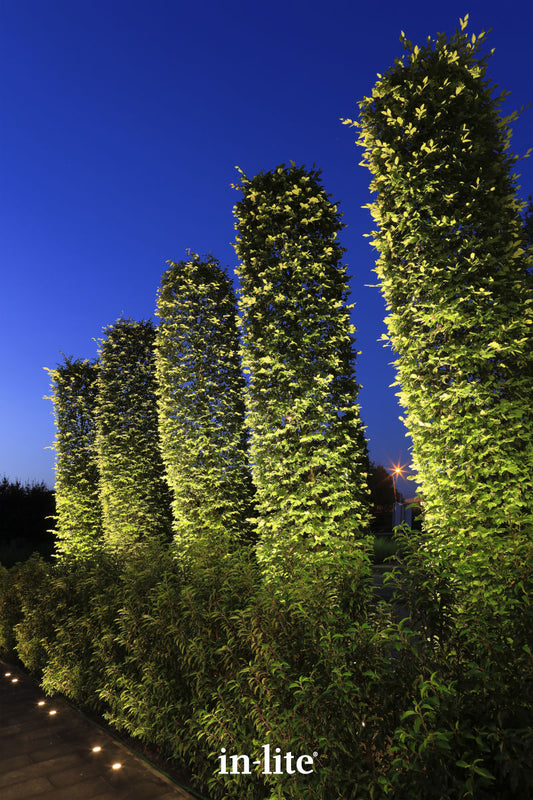
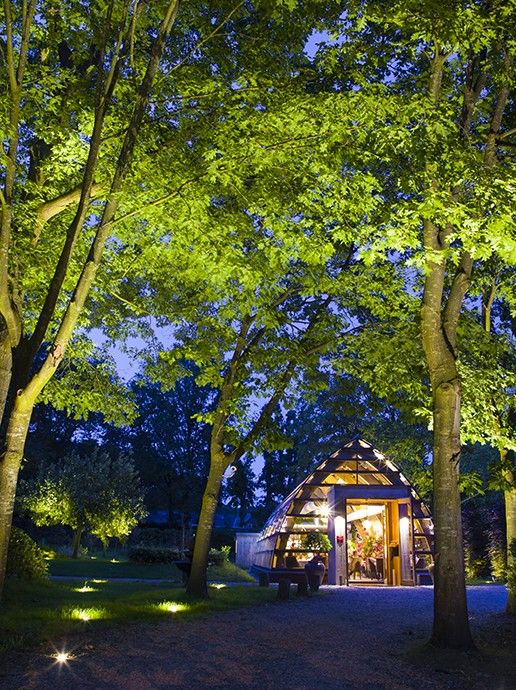
Decide which natural features give the tree its character before positioning the light. Illuminating the trunk can emphasise bark texture and vertical form, while directing light into the branch structure reveals shapes that look amazing on mature or multi-stem trees.
Lighting the canopy from below brings out the underside of leaves and gives the crown more volume after dark. You do not need to illuminate every part equally. Allowing branches or sections of foliage to remain in the shadows creates contrast and preserves the tree's three-dimensional appearance.
Where should you position a spotlight around a tree?
The distance between the spotlight and the tree influences how much of the trunk and canopy the beam can illuminate. For a small tree, positioning the fixture approximately 0,3 to 0,9 metres from the trunk is a good starting point. Aim the light upwards towards the trunk and lower canopy, adjusting the angle to suit the shape of the tree.
For larger trees or wide canopies, move the fixture further back to approximately 0,9 to 2,4 metres from the trunk. The additional distance allows the beam to spread across a larger section of the branches and canopy. For a tall, slim tree, positioning a NARROW fixture closer to the base can help direct the light further upwards.
Always consider the main viewing direction from the terrace, house, or garden. Position the spotlight slightly outside this sightline and aim it away from seating areas and windows so that the illuminated tree (rather than the light source itself) remains the focal point.
How many spotlights do you need to highlight a tree?
A single spotlight can work well for a small or narrow tree, particularly when you want a more dramatic effect with a clearly illuminated side and deeper shadows elsewhere. For a large tree or broad canopy, two or more light sources can reveal more of the crown and prevent the tree from appearing flat from the main viewing direction.
Avoid aiming multiple spotlights at exactly the same area. Instead, illuminate the tree from different angles so that the trunk, branches, and foliage retain contrast and depth. For an even wider canopy, two or three fixtures positioned around the tree can be used to illuminate different sections of the crown.
How does tree lighting change throughout the seasons?
Tree lighting creates a different effect as the tree changes through the year. In summer, a dense canopy catches more light and creates strong contrasts between illuminated leaves and deeper shadows. During autumn, the changing foliage can make the colour and texture of the crown more prominent.
For deciduous trees, autumn and winter reveal the trunk and branching structure that may be hidden by foliage during the growing season. Check the lighting as the seasons change and adjust the direction of a spotlight where necessary. This also helps compensate for new growth as the canopy becomes wider or denser over time.
Benefits of highlighting a tree well
-
Creates a natural focal point after dark
A beautifully illuminated tree can become a visual centrepiece that gives the garden a unique point of interest. -
Adds vertical dimension to the garden
Drawing light upwards into the canopy introduces height to the lighting plan, balancing well with lower-level lighting around paths, borders, and terraces. -
Transforms the view from inside the home
A lit tree remains visible through windows after sunset, creating an attractive outdoor feature even when the garden is viewed from indoors. -
Creates dramatic silhouettes and shadows
Light passing through branches and foliage projects changing patterns onto the ground and surrounding surfaces, adding movement and visual interest.
Buy in-lite lighting for trees at Gardenlightsstore.com
Explore in-lite SCOPE and NERO lighting for highlighting trees at Gardenlightsstore.com, with different light outputs and beam widths for small or mature specimens. With over 20 years of experience with in-lite, our lighting specialists can help you choose the right spotlight, beam, and positioning for the tree in your garden.
Orders over €100 qualify for free shipping across the EU, and all products come with a 5-year warranty.
Frequently asked questions
Which type of garden light is best for trees?
Outdoor spotlights are generally the best choice for illuminating trees because they allow you to direct the beam exactly where it's needed. The ideal beam angle depends on the height and width of the tree, so larger trees often require a different lighting approach than smaller ornamental trees.
Do I need a professional to make a garden lighting plan?
No. A pen, paper, and this guide are enough for most gardens. If your garden is large or complex, we're happy to help you work through it.
Can I expand my garden lighting system later?
Yes. One of the advantages of the in-lite 12V system is that it can easily be expanded over time. You can start with lighting for your patio and pathways, then add fixtures for trees, borders, or other garden features as your lighting plan evolves.
Can I change the light effect of my fixture?
Yes, selected in-lite fixtures can be combined with accessories that adjust their appearance or light effect. Available options depend on the specific fixture and can include lenses, shutters and other design accessories. Check the page of the appropriate series to see which accessories match the products.
How do I choose the right outdoor spotlight for my garden?
Choose an outdoor spotlight based on what you want to illuminate, the size of the feature and the lighting effect you want to create. Compact spotlights are suitable for smaller plants and shrubs, while larger features such as mature trees may require a more powerful spotlight. For water features, choose a fixture specifically designed for that application.
What is the difference between a narrow and wide spotlight beam?
A narrow beam concentrates light on a smaller area, making it suitable for highlighting a specific feature more precisely. A wider beam spreads the light across a larger area and can illuminate more of a tree, plant or other garden feature. The best beam depends on the size and shape of the feature and the effect you want to create.
Can smart lighting help me create different atmospheres in my garden?
Yes. Compatible in-lite smart fixtures allow you to adjust light intensity and, depending on the fixture, light colour through the in-lite app. You can also use lighting zones and routines to adapt different parts of the garden to relaxing, dining, or entertaining.
How do you choose the right outdoor light for each part of the garden?
Choose the fixture according to the application and desired light effect. Spotlights work well for directional accent lighting, recessed lights provide discreet illumination, and bollards add light around paths and planting. Wall, pendant, or ceiling lights can provide ambient and functional light around buildings and seating areas.